

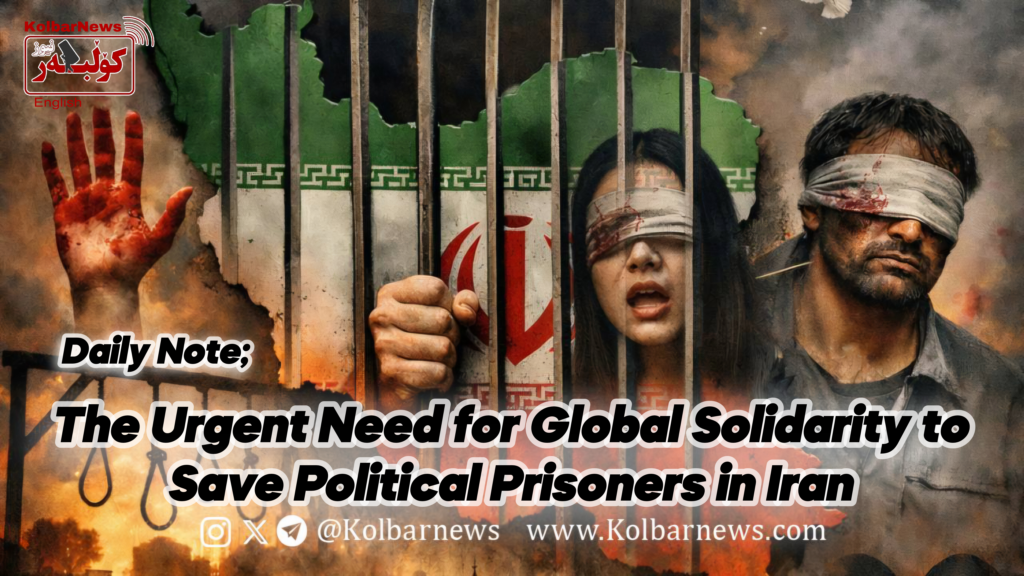
Following the recent wave of nationwide protests in Iran, tens of thousands of people have reportedly been arrested. Widespread reports indicate systematic torture, enforced disappearances, forced confessions, and the imminent risk of executions for many detainees. Behind the closed doors of detention centers and prisons, a major humanitarian crisis is unfolding. These conditions constitute an emergency situation requiring immediate and coordinated global action. In this context, protests and advocacy efforts outside Iran are critically important to protect political prisoners and prevent further violent repression.
Saving the lives of political prisoners in Iran requires global solidarity and consensus. The situation of those detained during protests has reached a level that can no longer be viewed as an internal matter. This crisis has humanitarian and international dimensions and must become a top priority for human rights organizations, global media, and civil society. International advocacy focusing on political prisoners and the threat of executions can help draw global attention to the crisis and increase political costs for the Iranian government.
Despite weeks passing since the protests, no precise statistics have been released regarding detainees. Unofficial sources estimate between 40,000 and 100,000 arrests, highlighting the scale of repression. This lack of transparency itself suggests attempts to conceal violations and potential deaths in custody. Documenting cases, publishing names of detainees, and demanding transparency are crucial efforts that can help prevent silent disappearances.
Many detainees are reportedly being held in prisons, secret detention facilities, and unofficial security centers. Their complete isolation from lawyers and families, lack of fair legal processes, and absence of independent monitoring create conditions conducive to torture and abuse. International activism can demand both the immediate release of political prisoners and access for independent international fact-finding missions.
The situation is further intensified by public statements from senior Iranian officials. The judiciary has ordered “expedited trials” and “severe punishments.”
Protesters are systematically labeled as “terrorists,” “foreign collaborators,” or “enemies of God”, charges that can lead to death sentences under Iranian law. Broadcast forced confessions on state media are considered part of psychological repression. International demonstrations, media campaigns, and diplomatic pressure can play a vital role in preventing executions.
Multiple reports also indicate that injured detainees have been denied medical treatment or deliberately killed while in custody. Allegations of secret executions without proper legal proceedings further highlight the immediate danger facing thousands of prisoners. Coordinated international networks, evidence collection, and cooperation with human rights organizations may help prevent prisons from becoming sites of silent mass killings.
Mahmood Amiry-Moghaddam, director of Iran Human Rights, has warned that executions are being used as tools to spread fear and suppress further protests. He stresses that thousands of detained protesters face immediate risks of execution or extrajudicial killings following unfair trials. These warnings emphasize that delays in international action could cost innocent lives.
Expanding global advocacy campaigns is therefore essential. Mass demonstrations, global awareness campaigns, legal action in international institutions, and support from labor unions, academic institutions, and civil organizations can help shift international pressure in favor of political prisoners. Past experience has shown that sustained global pressure can slow executions and even lead to prisoner releases.
Ultimately, defending political prisoners is not only a moral responsibility but also part of the broader struggle for freedom and the right to life. International activism can amplify the voices of prisoners who are silenced behind prison walls. Every protest, statement, and global campaign can help prevent a greater humanitarian catastrophe. Now is the time for global solidarity to become a real and effective force capable of saving thousands of lives.
