

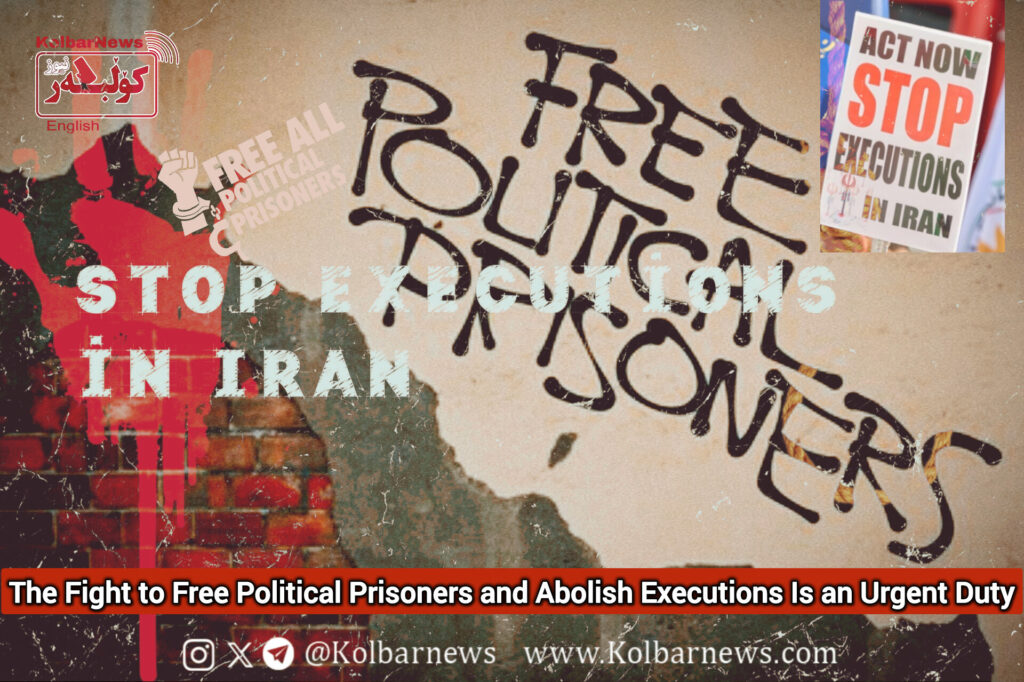
Following the 12-day war between Iran and Israel, a new wave of arrests targeting civil and political activists has swept across the country, under fabricated pretexts. Simultaneously, pressure on political prisoners inside Iran’s prisons has intensified. After Israel’s bombing of Evin Prison, the Islamic Republic hastily transferred political detainees from Evin to the Greater Tehran Prison in Fashafuyeh. Harrowing stories have emerged about the conditions of the transfer and the inhumane situation inside the new prison. Reports from within call for immediate and large-scale action, both inside and outside Iran, to save the lives of these imprisoned fighters.
In addition to the ongoing daily executions of inmates convicted in regular courts, the regime continues to execute political prisoners. The growing pressure and brutality by interrogators aim to break the spirit of this widespread social resistance. But the vast support for political prisoners and public solidarity with their families reflect not only the resilience of the prisoners themselves but also the growing desperation of their oppressors. The Islamic Republic’s efforts to crush dissent have failed. While the slaughterhouses of the 1980s once fortified the foundations of the regime, those very prisons now shake its pillars.
Unlike in the 1980s, when only underground political organizations dared to protest prison atrocities, today the outcry is broad and public. Dozens of websites and civil society groups openly campaign for political prisoners. The demand to abolish the death penalty, alongside the call for the release of all political prisoners, has become a core demand of Iran’s freedom movement.
For the past 46 years, the Islamic Republic has relentlessly imprisoned, tortured, and executed its political opponents to maintain its rule. Yet today, the struggle to overthrow this regime is more widespread than ever. The front lines of this fight extend from factories to the streets, from urban neighborhoods to village alleys. The Woman, Life, Freedom movement continues to inspire and energize the broader resistance.
The struggle against imprisonment, torture, and execution is a shared cause. The working class, in particular, has the most to gain from the protection of democratic rights, including an end to arrests and the death penalty. Without prisons and political prisoners, the Islamic regime could not survive even a day.
From its inception, the Islamic Republic has waged war not only on organized political opposition, but on leftists, communists, labor activists, secularists, democrats, ethnic and religious minorities particularly Kurds and Baháʼís. Thousands have been executed, tortured, imprisoned, or forced into exile. Women’s rights activists, human rights defenders, and courageous lawyers have faced severe repression. Writers, journalists, artists, musicians, and filmmakers have been silenced and persecuted. Environmental activists and other civil society figures have been jailed and in some cases executed on baseless charges. The regime’s repression has even extended to its own former officials and factions, many of whom have been imprisoned or placed under house arrest. Today, there are few families in Iran untouched by political imprisonment, execution, or forced migration.
That is why the fight to free political prisoners and support their families is a serious step toward toppling the Islamic Republic and building a future without executions or political prisons.
Undoubtedly, with the fall of this regime, the gates of political prisons will be broken open. Those who endured torture and death in the pursuit of freedom and justice will return to the embrace of the people with dignity and honor. But until that day comes, it is essential for millions of protesters to use every means at their disposal to prevent executions, to stop the torture of political prisoners, and to secure their release.
The call to free all political prisoners must echo in every street and neighborhood.
No one should be imprisoned for fighting for their rights, for protesting economic hardship and oppression, for holding dissenting views, or for engaging in political activity.
If anyone belongs behind bars, it is those responsible for the current suffering: those who imprison and torture the children of the people, those who kill and bury them in unmarked graves, those who plunder the wealth of society and impose pain, poverty, and repression on the people.
In this context, broad unity and coordinated action around the slogan of freeing political prisoners and abolishing criminal sentences becomes not only possible but essential. The Islamic Republic’s grip must be broken from the lives of those in chains. But such a task can only be carried out by the people, those whose powerful hands hold the regime’s fragile lifeline. Only through united struggle and mass protest can the regime be forced to abandon these inhumane acts.
