
The death sentence of Naser Bakrzadeh, a prisoner held in Urmia Central Prison who is accused of “spying for Israel,” has been fully upheld by the Supreme Court and officially communicated to him.
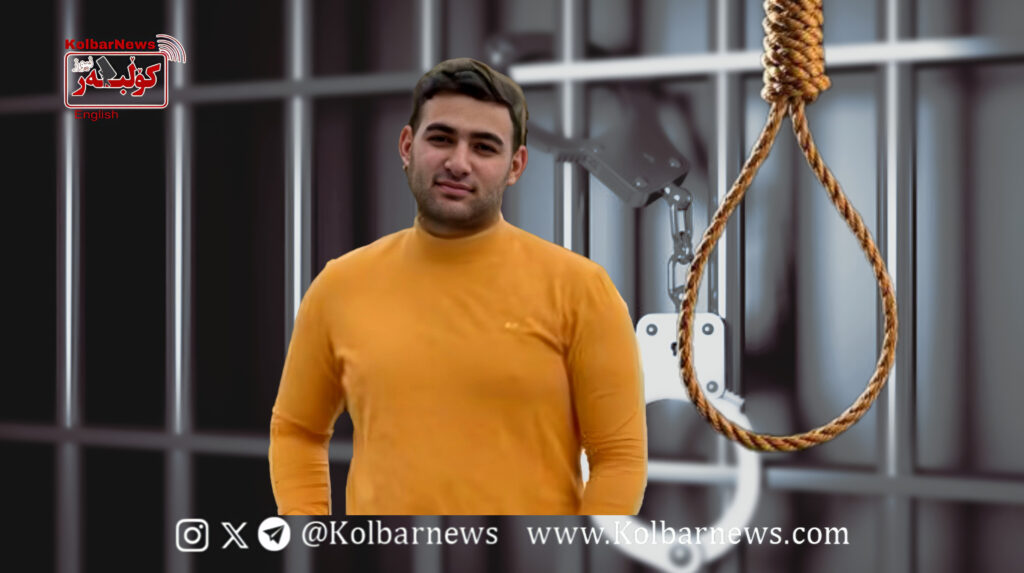
According to Kolbarnews on Saturday, April 25, 2026, Naser Bakrzadeh was formally informed of the confirmation of his death sentence after being summoned to the office for the implementation of sentences at Urmia Central Prison.
This sentence had previously been issued for the third time in February 2026 by Branch Two of the Revolutionary Court of Urmia.
Based on the information obtained, this case had been reviewed multiple times in recent months by the Supreme Court, and in some instances had been overturned due to deficiencies in investigations and disregard for defense evidence, and referred to a parallel court. However, Branch Two of the Revolutionary Court of Urmia once again issued the death sentence, and this time the Supreme Court has confirmed it.
Naser Bakrzadeh, 25 years old and from Urmia, was first sentenced to death in November 2024 by Branch One of the Revolutionary Court of this city.
The hearing on the charges against him was held on November 3 of that year. This sentence was overturned in April 2025 at the appeal stage, and the case was returned for retrial, but subsequently the death sentence was issued again.
This Kurdish citizen was arrested on August 9, 2023, by security forces and, after several weeks of interrogation, was temporarily released. However, he was rearrested on January 2, 2024, and after several months of interrogation in the IRGC Intelligence detention center at Al-Mahdi barracks in Urmia, he was transferred to the central prison of this city.
The issuance and confirmation of death sentences in cases involving security-related charges “especially under conditions where reports of deficiencies in due process and restrictions on access to defense rights have been raised” have caused serious concern among human rights organizations. At the same time, with the intensification of the security atmosphere following the 40-day war between Iran, Israel, and the United States, the risk of an increase in the issuance and implementation of such sentences has become even more pronounced.