

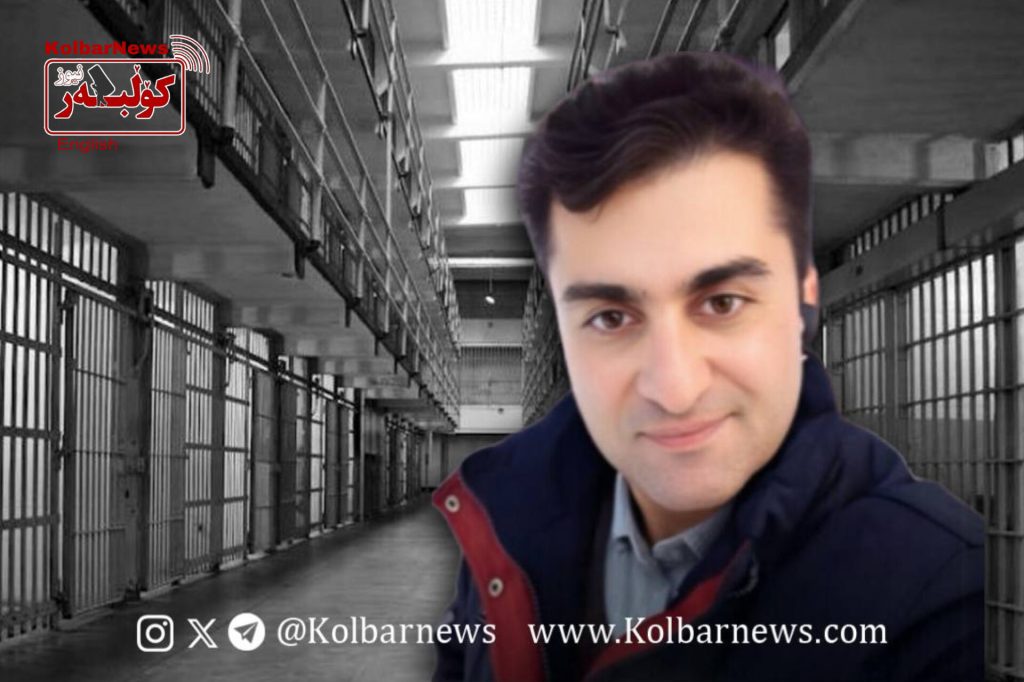
Rezgar Beigzadeh Babamiri, a 47-year-old political activist from Bukan and currently a political prisoner held in Urmia Central Prison, shared a painful letter dated April 10, 2025, recounting over four months of detention and torture. This testimony reveals the severe abuses inside Iran’s detention centers, calling into question basic human dignity and exposing grave violations of human rights. In this report, we will examine the documented details of the case, analyze the various dimensions of rights violations by the Islamic Republic, and attempt to amplify the voice of Rezgar Babamiri and other political prisoners trapped in the regime’s dark cells.
Rezgar Beigzadeh Babamiri, a resident of Bukan, was summoned by phone on April 17, 2023, by a man named Saeedi claiming to be an agent from the Intelligence Office of Bukan and was instructed to report to a location near Roj Hall. Upon arrival, Babamiri was arrested by security forces and taken to the Intelligence Office of Bukan, a site known for the brutal torture of hundreds before him. A six-person interrogation team subjected him to torture in rotating shifts of continuous beatings, electric shocks, death threats, and relentless psychological humiliation. He lost consciousness multiple times and suffered serious physical harm. His torturers repeatedly warned him that he would meet the same fate as previous victims, whose bodies were allegedly dumped in remote places like the Bukan dam lake or buried in mass graves. These threats, combined with physical abuse, created an atmosphere of sheer terror and demonstrate a blatant violation of international conventions prohibiting torture.
In his letter, Babamiri goes on to explain that after three days of non-stop torture in Bukan, he was transferred ‘alongside other detainees’ to the Intelligence Detention Center in Urmia. The torture not only continued but intensified in a more organized and specialized manner. He described specific techniques used against him: simulated suffocation with a plastic bag and cold water, mock executions using nooses and fake gunfire, electric shocks to sensitive areas, and sleep deprivation through continuous beatings and harassment. These methods, clearly aimed at destroying the individual’s physical and psychological integrity, are evidence of a systematic and state-organized torture apparatus inside the Islamic Republic. Such actions constitute a clear violation of international human rights laws, including Article 5 of the Universal Declaration of Human Rights and the UN Convention Against Torture, both of which Iran has ratified.
Babamiri writes that upon his eventual transfer to Urmia Central Prison, despite visible signs of severe torture, he filed several formal complaints against his torturers. Although a case was opened in the military prosecutor’s office and referred to the military court, judicial authorities suspended proceedings under the pretext of “time elapsed” and refused to refer him to a forensic medical examiner to confirm the torture. This reveals the judiciary’s lack of independence and its role in protecting human rights violators. During his court session at the Urmia Revolutionary Court, when Babamiri and others raised the issue of torture, Judge Reza Najafzadeh responded only with a contemptuous remark: “What did you expect? Kebab?” a statement that underscores the institutional disregard for human dignity and the legal rights of detainees, reinforcing a climate of fear and repression.
Rezgar Beigzadeh Babamiri (47), Pezhman Soltani (30), Soran Ghasemi (28), Kaveh Salehi (40), and Tayfour Salimi Babamiri (47) are five political detainees from Bukan who were charged with serious offenses including “baghi” (armed rebellion), “moharebeh” (enmity against God), and membership in terrorist groups. These charges led to death sentences and lengthy prison terms. Babamiri was sentenced to three death penalties and 15 years in prison. These verdicts were issued without fair or transparent trials, based on forced confessions obtained under torture and intense security pressure, clear violations of both domestic and international legal standards. In total, the group was sentenced to over 75 years of imprisonment, reflecting how the Islamic Republic weaponizes the judiciary to silence political and civil dissent.
Zhino Babamiri, daughter of Rezgar Babamiri, has confirmed that the signs of brutal torture are still visible on her father’s body. She described his partial deafness in the left ear, recurring ear infections, widespread bruises, and visible injuries to his legs. These injuries not only point to the extreme physical abuse he endured, but also highlight the dire health and medical conditions in Iranian prisons and the lack of forensic medical support. In his letter, Babamiri also emphasized that the torture he endured was not only physical, but psychological targeting and destroying his will and sense of identity, an act that violates every human and legal principle and mirrors the behavior of totalitarian regimes where human rights are sacrificed in the pursuit of power and control.
In his appeal to the global community, human rights organizations, and advocates for freedom, Babamiri called for an end to silence and indifference in the face of such crimes against humanity. He stressed that remaining silent in the face of systemic violence amounts to complicity in oppression. His message echoes the suffering of millions who endure torture and repression in Iran and other authoritarian regimes, often without their voices being heard by the international community.
Kolbarnews, emphasizing the urgent need to support victims of torture and restore their human rights, calls on international institutions, conscientious individuals, and all freedom- and justice-seeking men and women to intensify political and legal pressure on the Islamic Republic and ensure that the voices of these victims are not drowned out by the noise of repression and propaganda.
