
In late September 2025, images from the Mediterranean Sea spread rapidly across global media, signaling a new chapter in humanitarian resistance against the blockade of Gaza. Israeli soldiers, equipped with helmets and night-vision goggles, were seen boarding ships whose passengers stood together with raised hands and life vests. Among them sat Greta Thunberg, the Swedish environmental activist now a symbol of worldwide solidarity with Palestine.
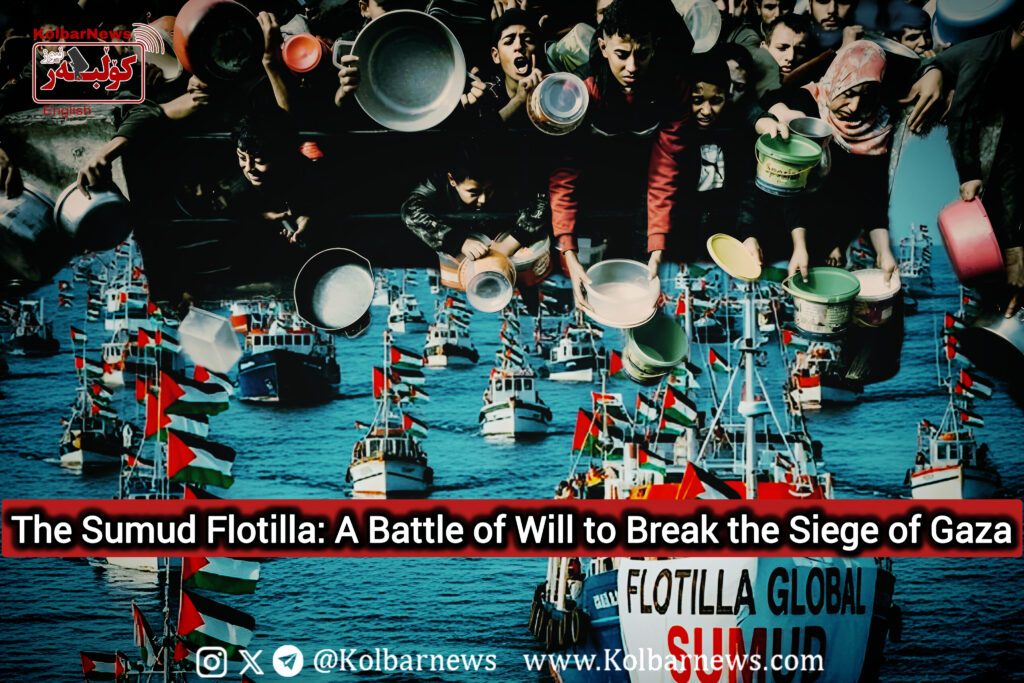
Israeli forces intercepted 39 boats from the Global Sumud Maritime Flotilla about 70 nautical miles off Gaza’s coast. This was the largest aid fleet ever assembled, bringing together more than 500 political and civil society activists, parliament members, and lawyers from over 40 countries. Their mission was simple: to break the naval blockade of Gaza and deliver medicine and food to an area whose border crossings have been completely sealed since December 2024.
The seizure of the flotilla triggered intense diplomatic reactions. Turkey called the action a “terrorist act,” and prosecutors in Istanbul opened an investigation into the detention of 24 Turkish citizens. Colombian President Gustavo Petro expelled Israel’s entire diplomatic mission and annulled the countries’ free-trade agreement after the arrest of two Colombians. Malaysia confirmed that 23 of its citizens had been detained and strongly condemned Israel’s actions.
Protests erupted in Italy, Colombia, Greece, Ireland, and Turkey, with Italian trade unions calling for a general strike.
The Sumud Flotilla is the latest in a long line of maritime efforts to challenge Gaza’s siege. Since 2008, the Free Gaza Movement has sent vessels such as the Free Gaza and Liberty to the enclave. Yet the image of the Mavi Marmara in 2010 remains etched in global memory, when Israeli commandos killed nine activists in international waters. The Mavi Marmara, part of the “Gaza Freedom Flotilla,” sailed under the slogan “Our destination is Palestine; our cargo is freedom.”
In recent months, ships named Madeline and Handel were also intercepted before reaching Gaza, and their cargoes including baby formula, flour, rice, and vital medicines were confiscated. Now, the Sumud Flotilla, with more than 50 boats from various nations, represents the largest maritime solidarity mission ever organized.
Gaza’s 40-kilometer Mediterranean coastline should be its natural lifeline for trade and contact with the world. Instead, Israel has militarized these waters, restricting Palestinian fishermen to just a few nautical miles from shore.
Unlike land convoys that must pass through checkpoints or airlifts that Israel refuses to permit, the sea remains the only viable route for independent humanitarian intervention. That is precisely why Israel defends it so fiercely and precisely why the flotillas carry such strategic significance.
Maritime convoys place Israel in a dilemma: allowing passage would mean acknowledging the illegitimacy of the blockade, while violently stopping them exposes the brutality of the regime before the eyes of the world. Israel’s Ministry of Foreign Affairs dismissed the mission as a “provocative performance,” yet the participation of countries such as Spain and Italy which even sent escort ships shows that this effort is far from merely symbolic.
Since October 2023, over 66,000 Palestinians, most of them women and children have been killed in Israeli attacks on Gaza.
The Sumud Flotilla is powerful, but limited. The people of Gaza need not only solidarity but also bread, water, medicine, and safety. These maritime missions highlight the failure of the international system to hold Israel accountable.
Italian activist Toni La Piccirilla, a participant in the flotilla, said: The history of Gaza’s flotillas shows that resistance always finds a way. These ships small and fragile compared to Israel’s war fleet embody the moral conscience of humanity. They may not have delivered their cargo, but they have carried a message the world cannot ignore: Gaza is not alone, and the siege will never be normalized.
The challenge now is to transform this symbolic and moral movement into tangible political change. Without that, the flotillas will remain courageous symbols of defiance in the face of cruelty powerful, yet insufficient to halt the machinery of oppression.
The responsibility lies with the international community: not only to protest, but to take decisive and practical action to prevent the continuing humanitarian catastrophe in Gaza.